
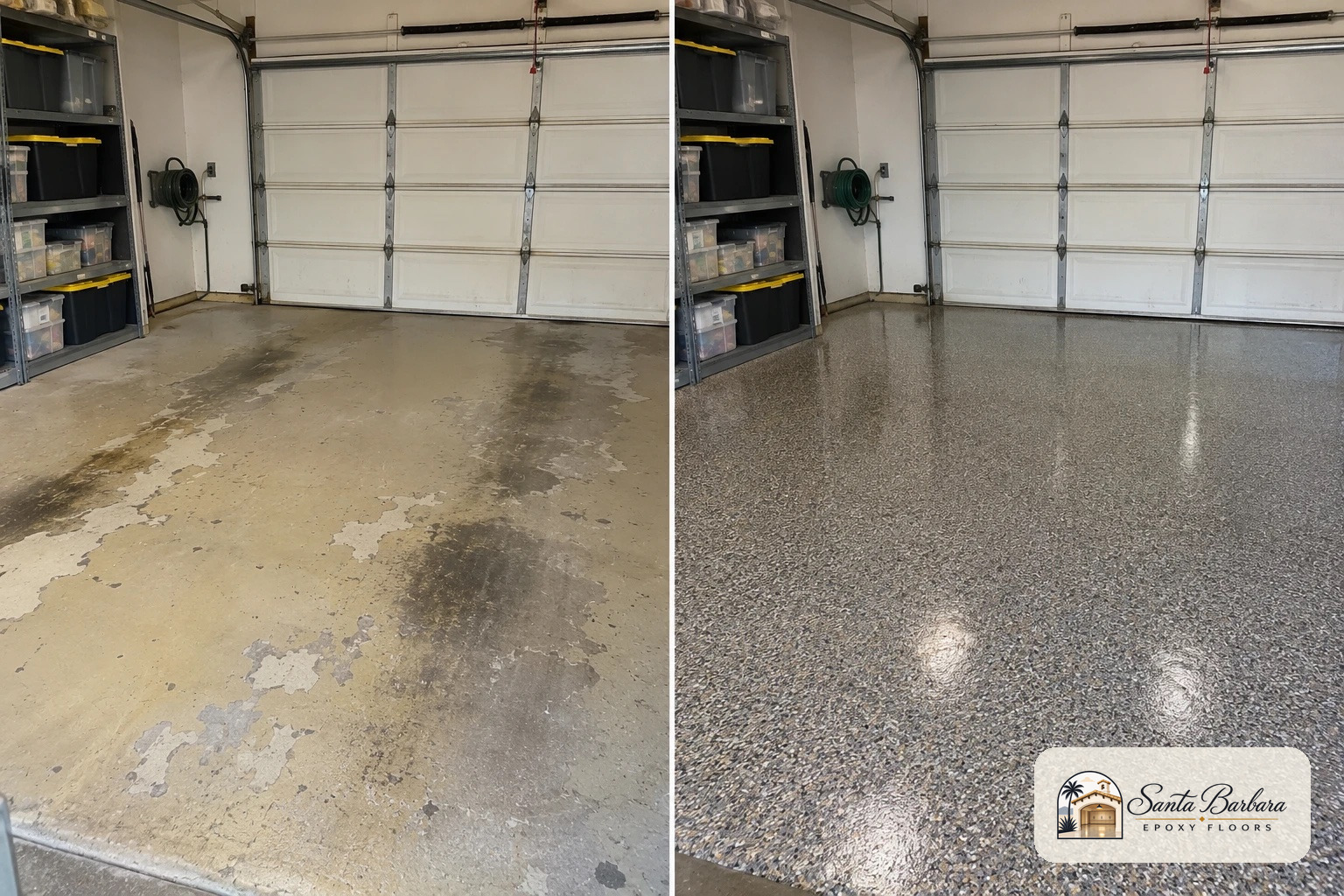
Epoxy Floor Repair & Recoating in Santa Barbara
Beach sand, hot tires and sun take a toll on any coating. Sometimes all that's needed is a fresh topcoat; sometimes the base layer has lost its bond and a new topcoat would just peel with it.
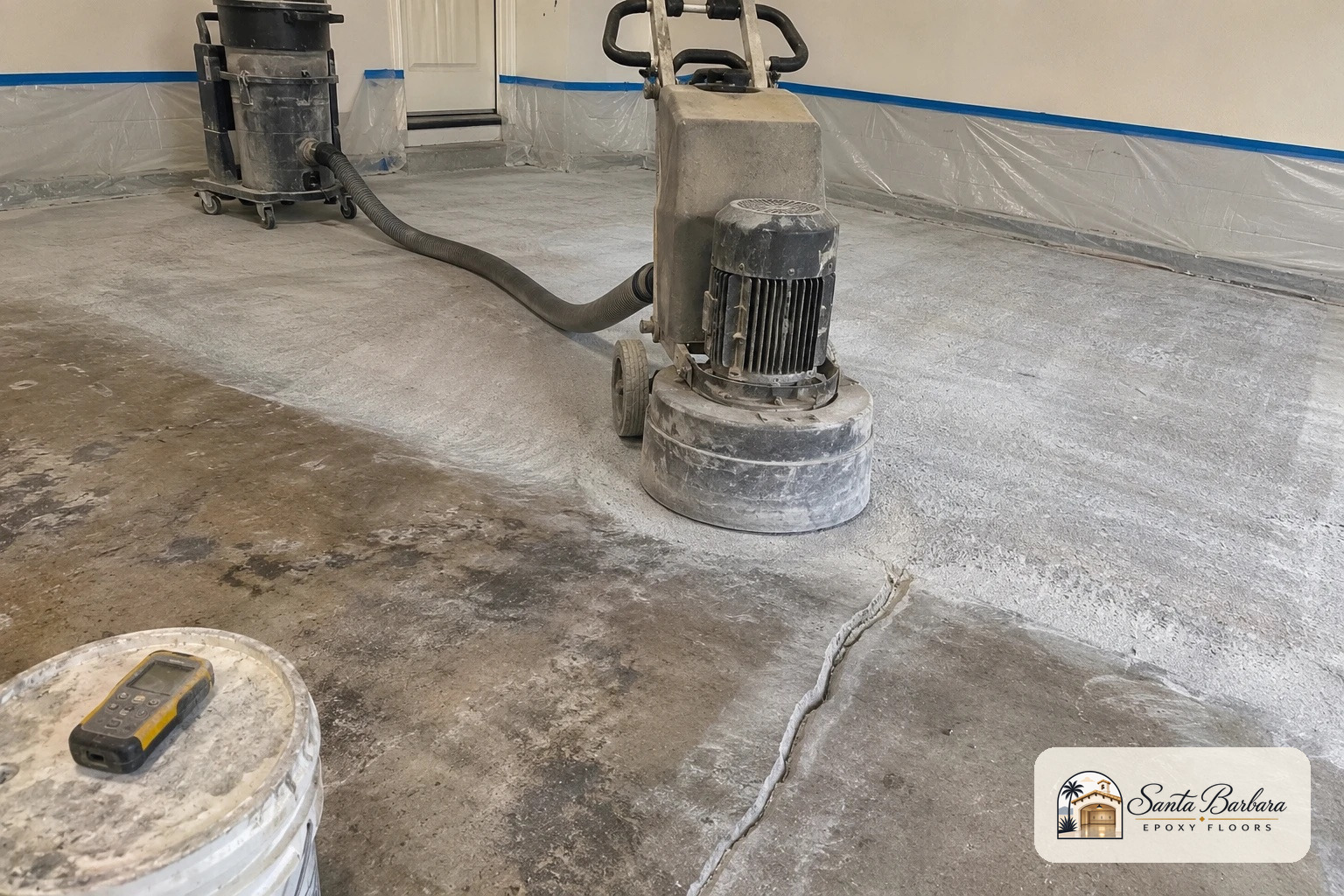
We start by testing the existing coating. We tap for hollow spots, look for lifting edges and, where adhesion is uncertain, run pull-off tests based on ASTM D7234. The results tell us whether to recoat, spot-repair or grind off and start again.
If a floor failed from moisture, we find out why. Recoating over a moisture problem only repeats it, so those floors get a moisture test and a mitigation primer in the new system.
What's Included
- Bond testing and inspection of the existing coating
- Abrade and recoat for sound floors with a worn topcoat
- Cut out, prep and patch localized failures to match
- Full grind-off and new system for widespread delamination
- Moisture testing on any floor that failed from below
- UV-stable topcoat to stop yellowing from coming back
Who It's For
Dull or scratched floors
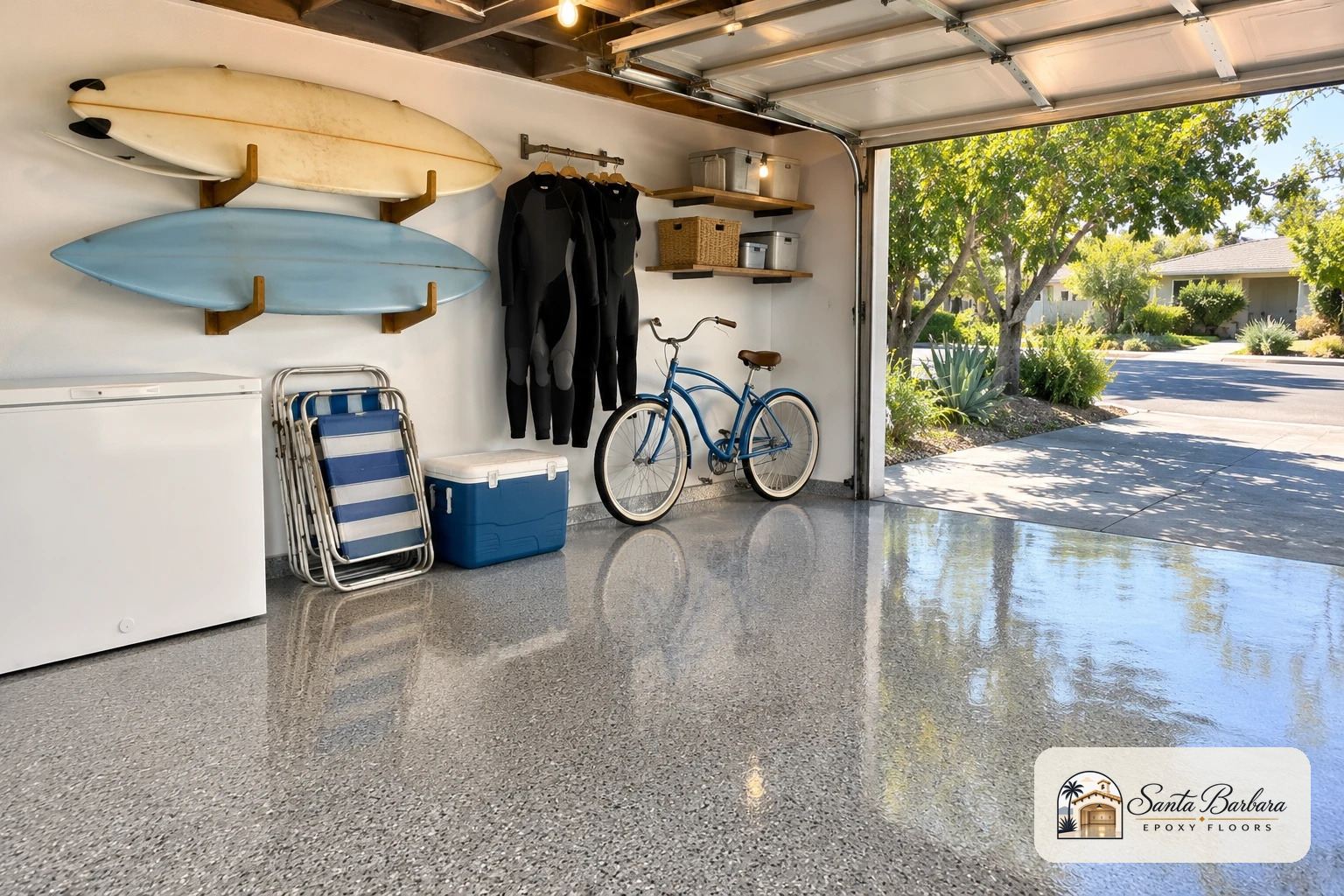
A new topcoat restores sheen and protection.
Hot-tire marks and chips
Spot repair, then recoat.
Peeling or yellowed DIY coatings
Ground off and replaced with a bonded system.
How We Install Floor Repair & Recoating
Step 1: Inspect
Tap, look and test the bond.
Step 2: Recommend
Recoat, repair or replace, explained in writing.
Step 3: Prepare
Abrade, patch or grind as the floor requires.
Step 4: Coat
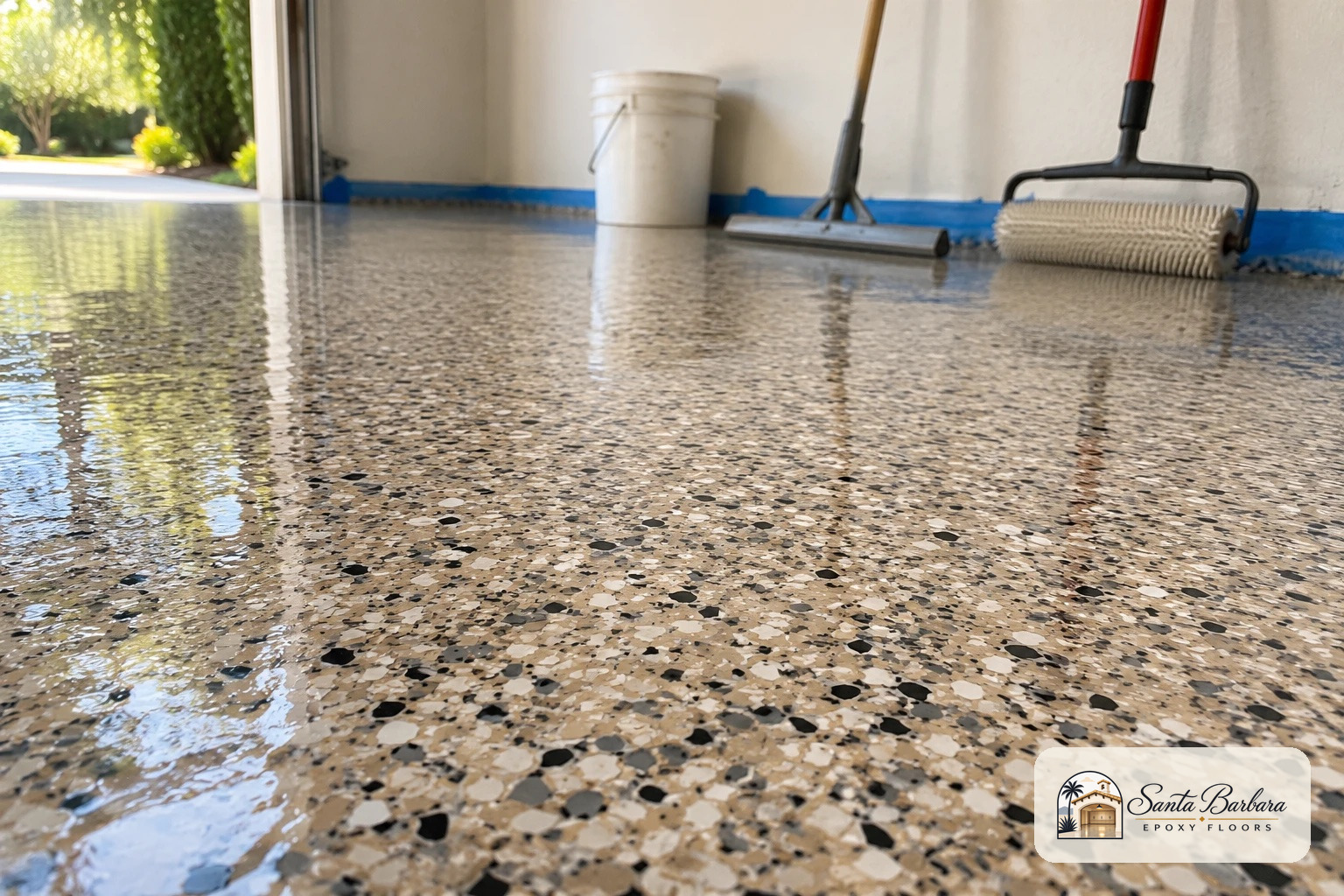
A topcoat or full new system.
Floor Repair & Recoating FAQs
Can you recoat over my old epoxy?
If the existing coating is well bonded, yes, after abrading it. If it's lifting, a new topcoat won't fix it and the floor needs to come up.
Why did my garage coating peel?
The usual causes are poor preparation (acid etching or no grinding), moisture vapor from the slab, or a thin coating that couldn't handle hot tires.
Is recoating cheaper than replacing?
Recoating before wear reaches the base coat usually costs less than a full replacement.