Garage, decorative, commercial and pool deck coatings specified for what Santa Barbara floors actually face: salt air, strong sun, damp slabs and beach sand.
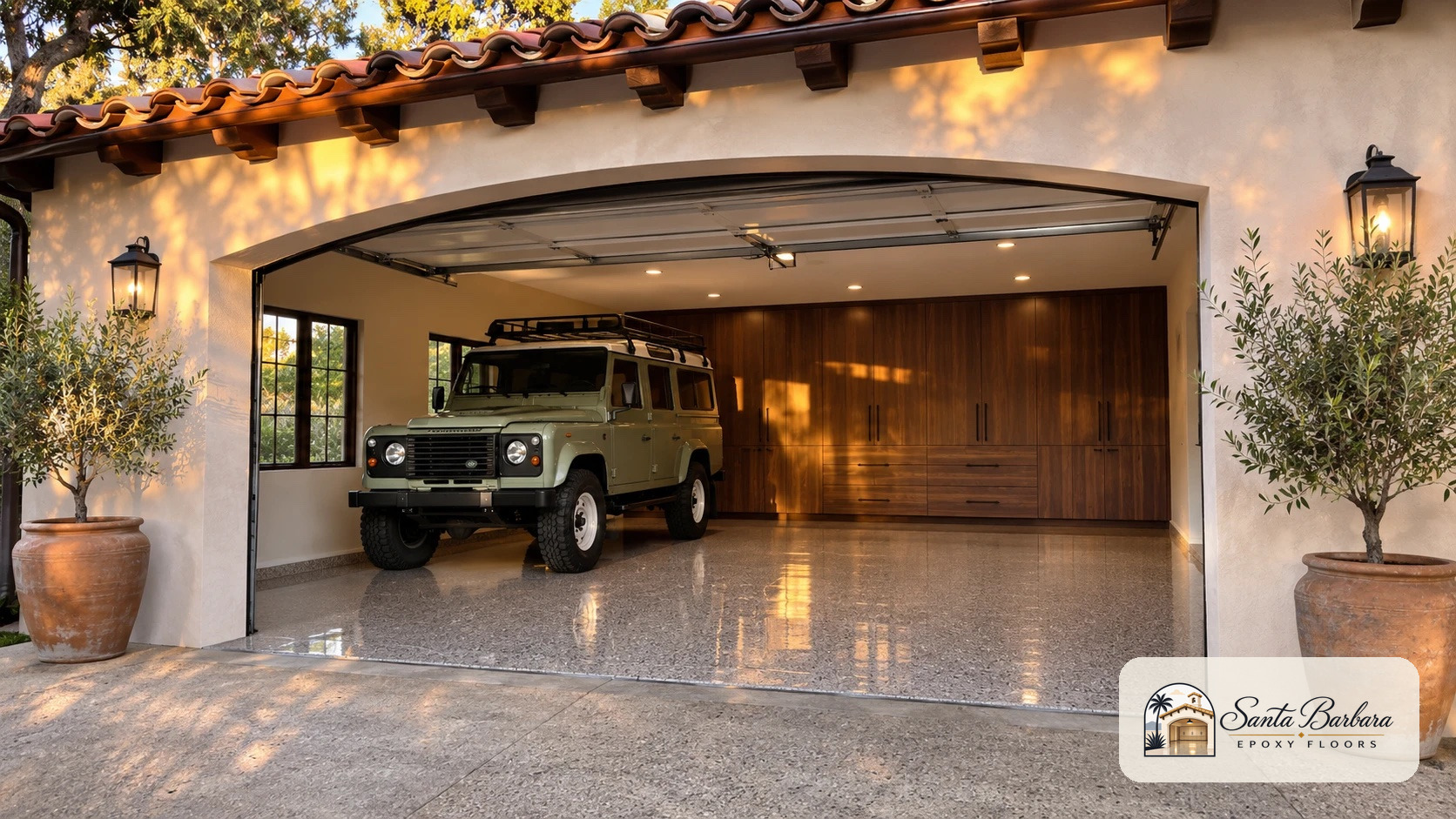
Santa Barbara Epoxy Floors installs epoxy and polyaspartic coating systems for homes and businesses across Santa Barbara, CA. Our services include garage floor coatings, decorative flake floors, metallic epoxy, commercial kitchen and restaurant floors, brewery and winery floors, showroom and retail floors, patio and pool deck coatings, and warehouse floors. We also handle concrete grinding, moisture mitigation, and floor repair and recoating.
The right coating for a Santa Barbara property depends on where the floor is and what it faces, since salt air, strong UV exposure, marine-layer moisture, and tracked-in beach sand each wear concrete surfaces differently. Standard epoxy can yellow in direct sunlight, so we often recommend UV-stable polyaspartic topcoats for garages and outdoor areas. For damp slabs, we use moisture mitigation primers to help prevent coatings from peeling or bubbling.
Below, we explain our coating options, preparation methods, and what to expect when you plan your project with us.
Key takeaways
Request a Free Floor Assessment
Tell us about the floor. We'll call to schedule a site visit and moisture test.
Ten services, grouped by where the floor lives. Every one starts with grinding and a moisture test.
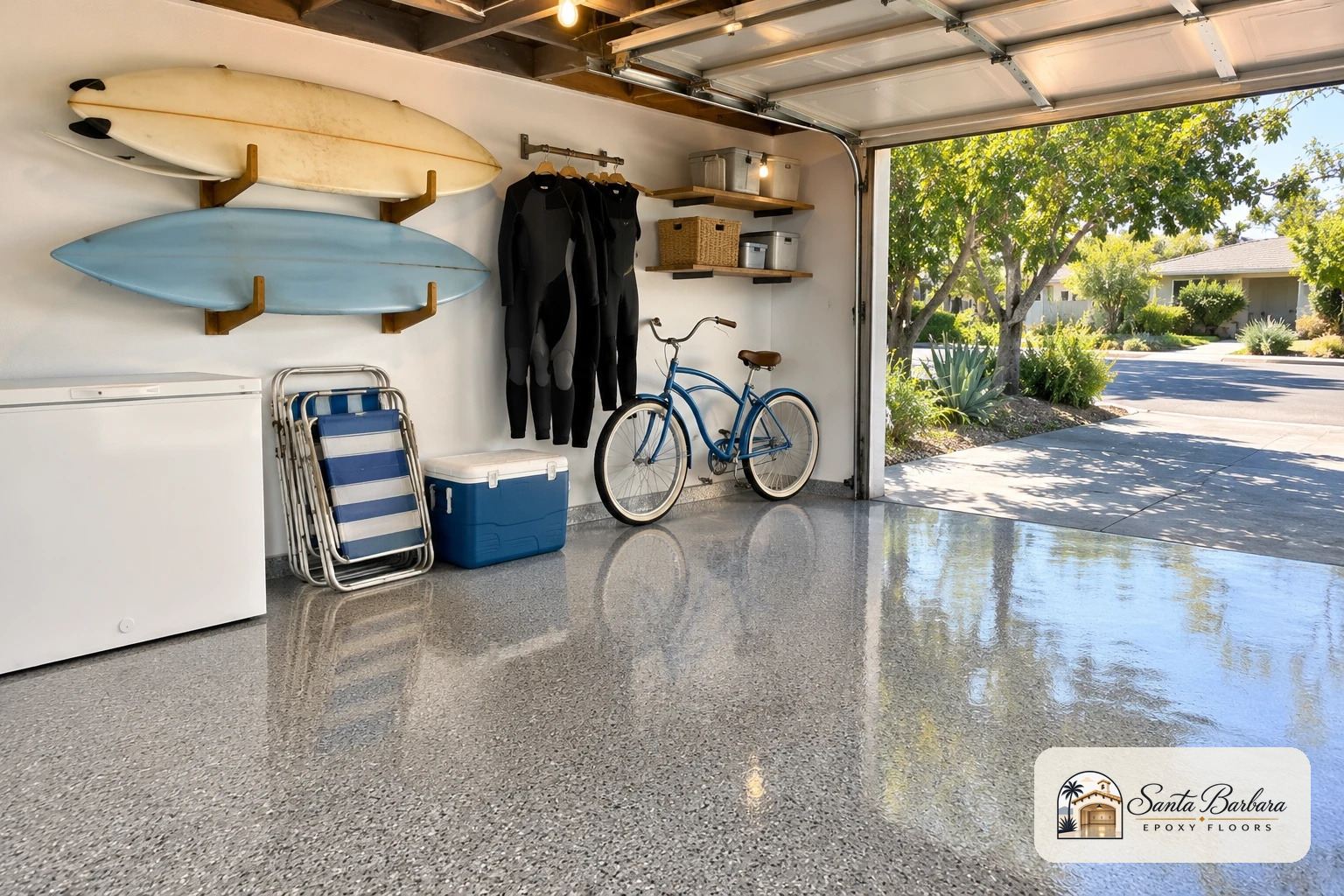 Garage Floor CoatingsUV-stable polyaspartic systems for garages that sit open to the sun and the salt air.Learn more →
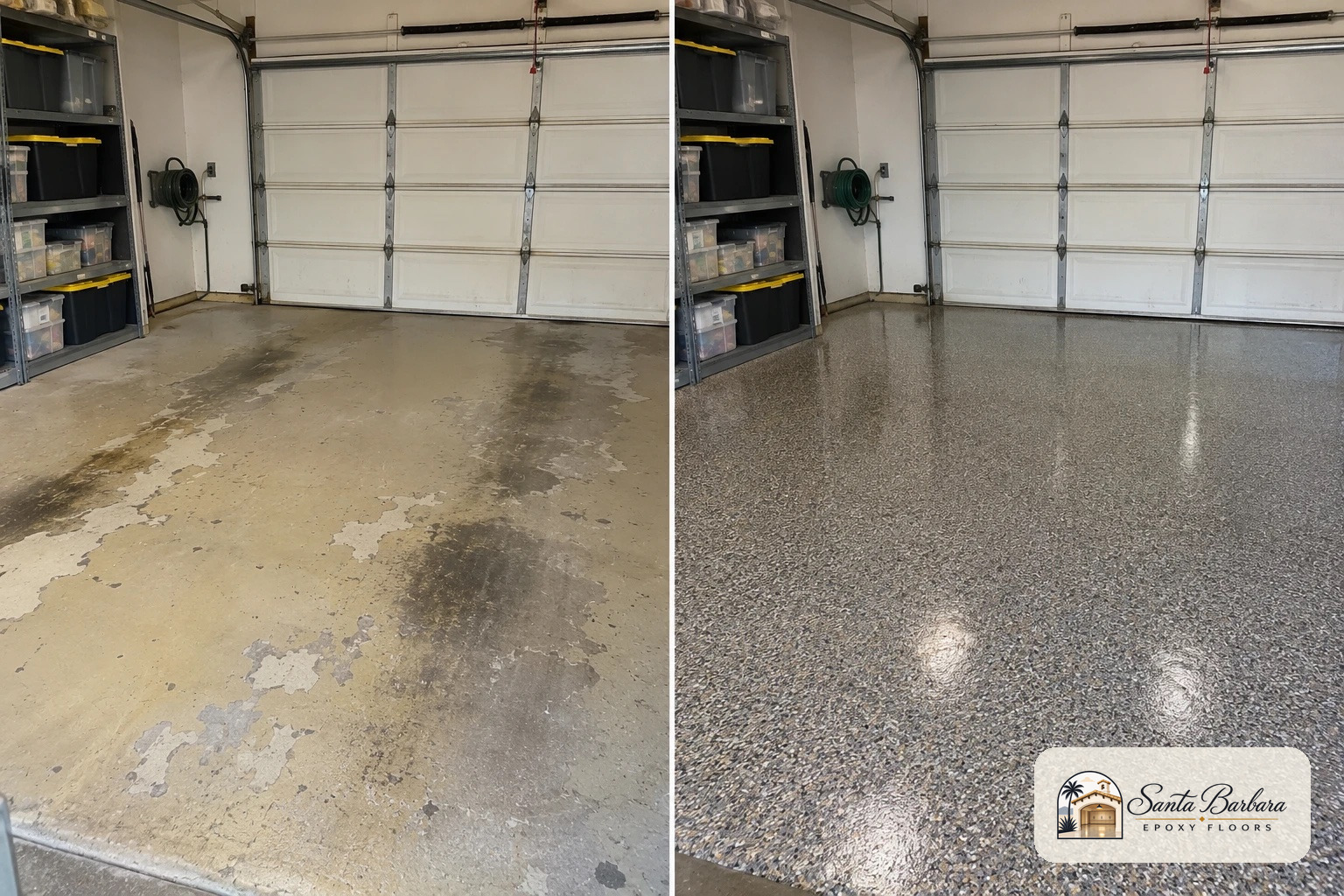
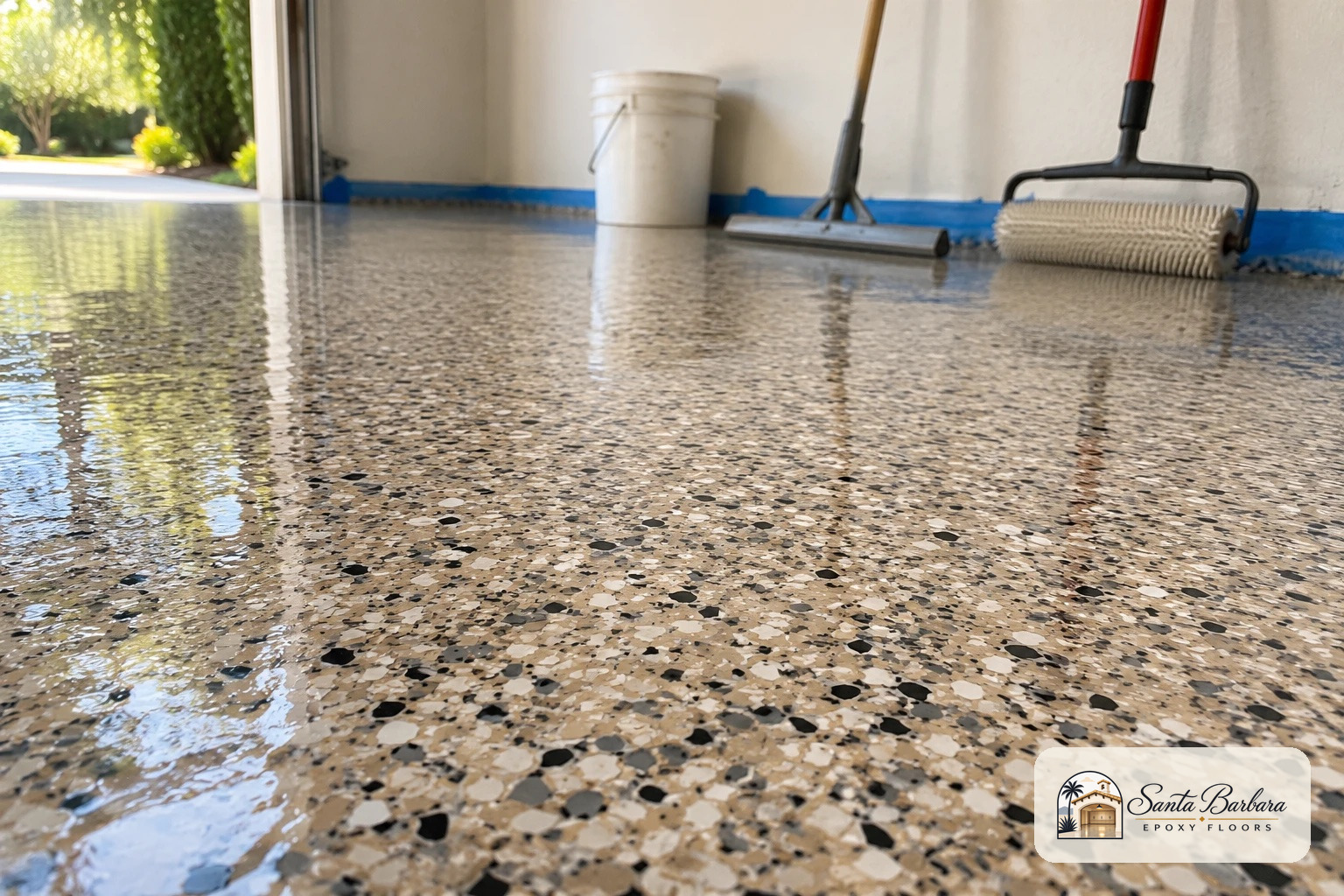 Decorative Flake FloorsCustom chip blends that hide sand, scuffs and slab blemishes, with built-in grip.Learn more →
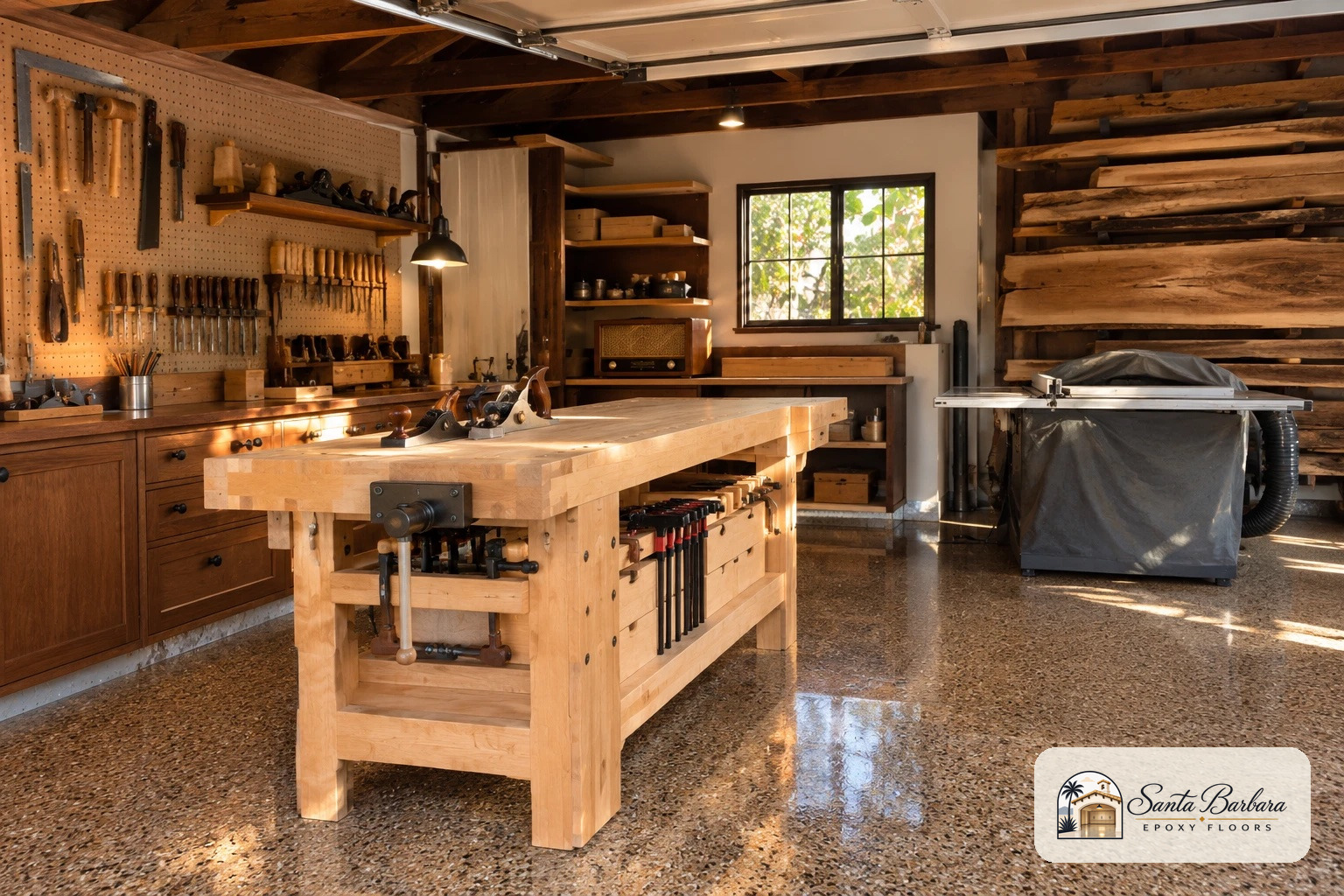
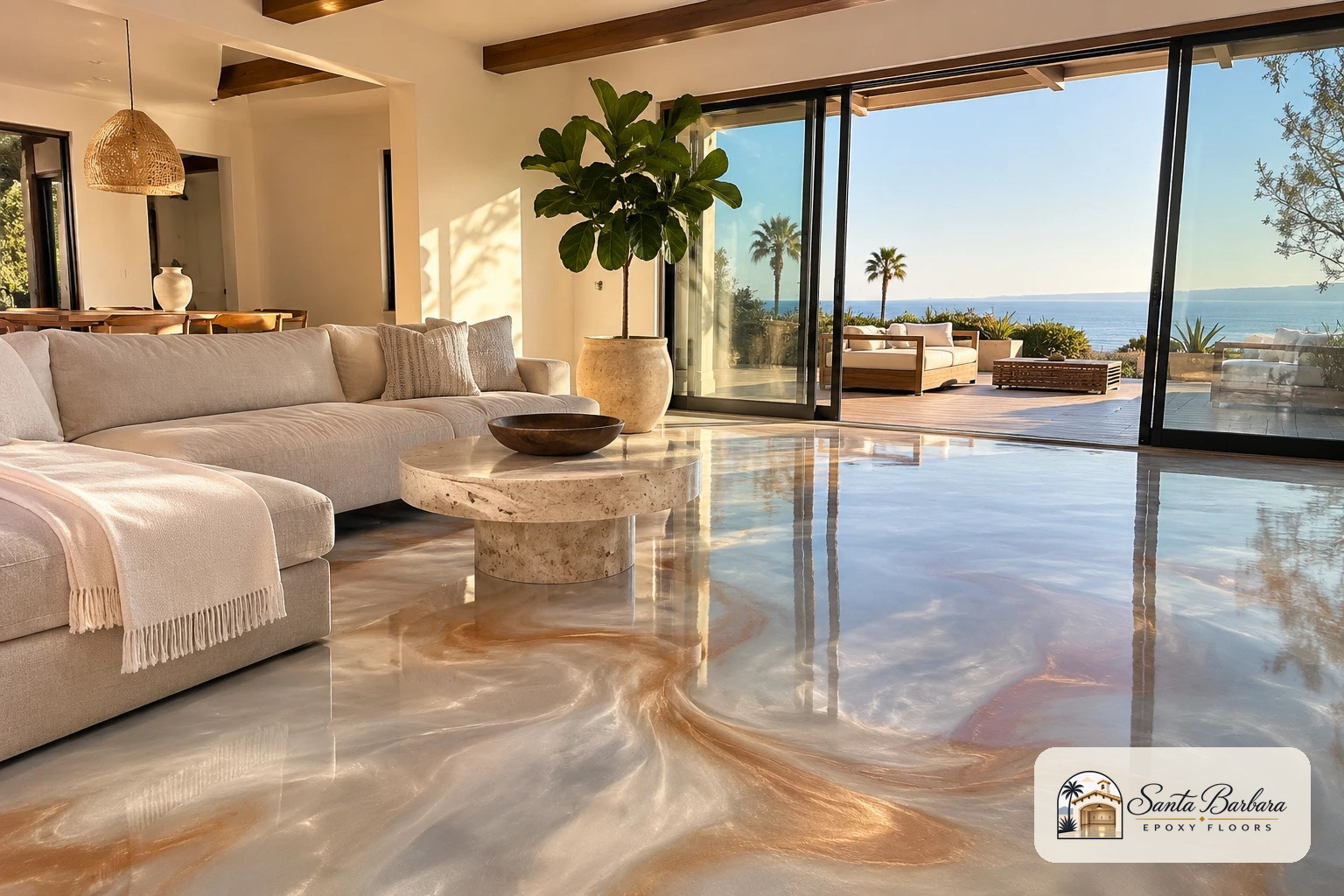 Metallic Epoxy FloorsPoured, hand-worked metallic finishes for living spaces, show garages and studios.Learn more →
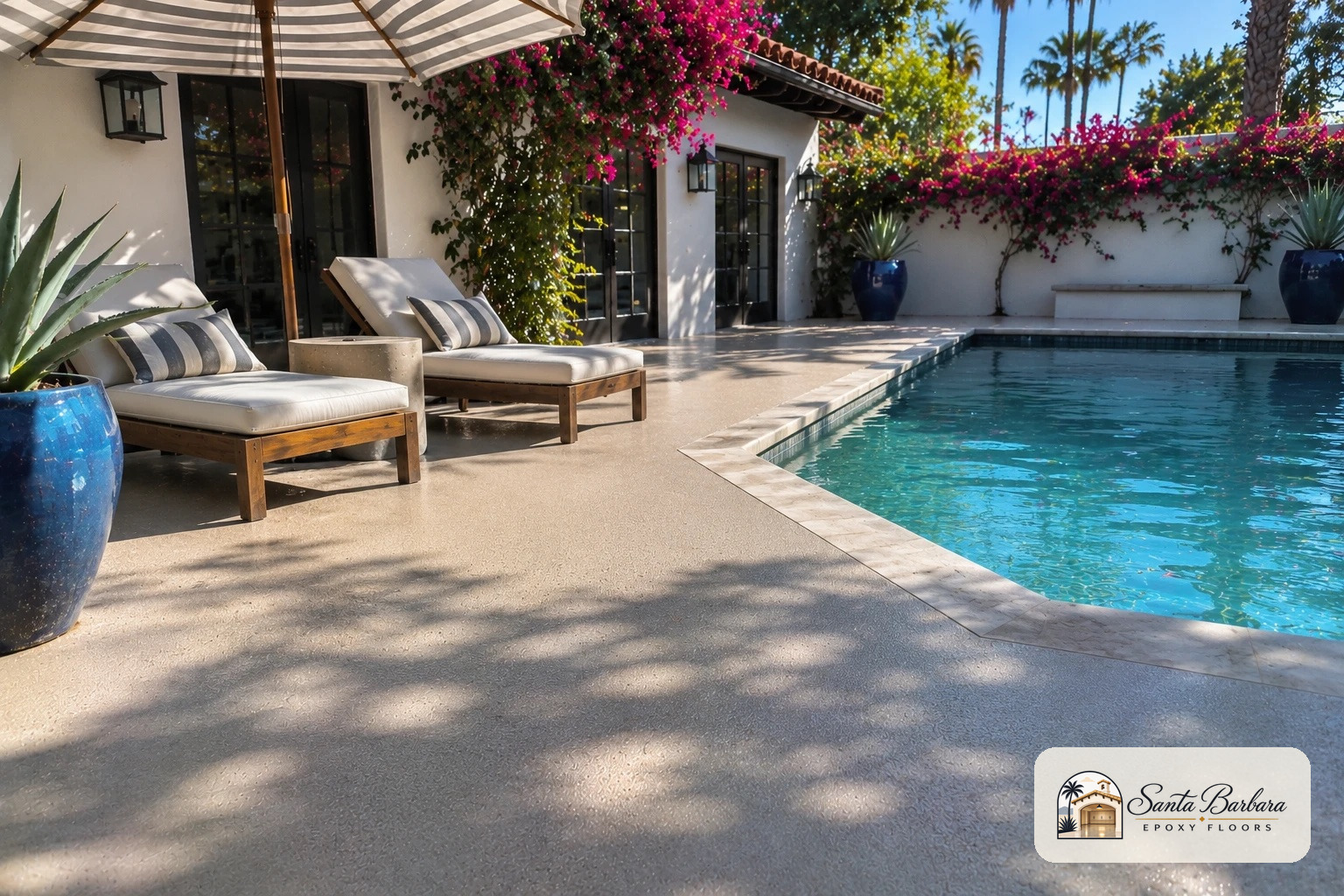 Patio & Pool Deck CoatingsTextured, UV-stable coatings for decks, patios and walkways that get wet and sandy.Learn more →
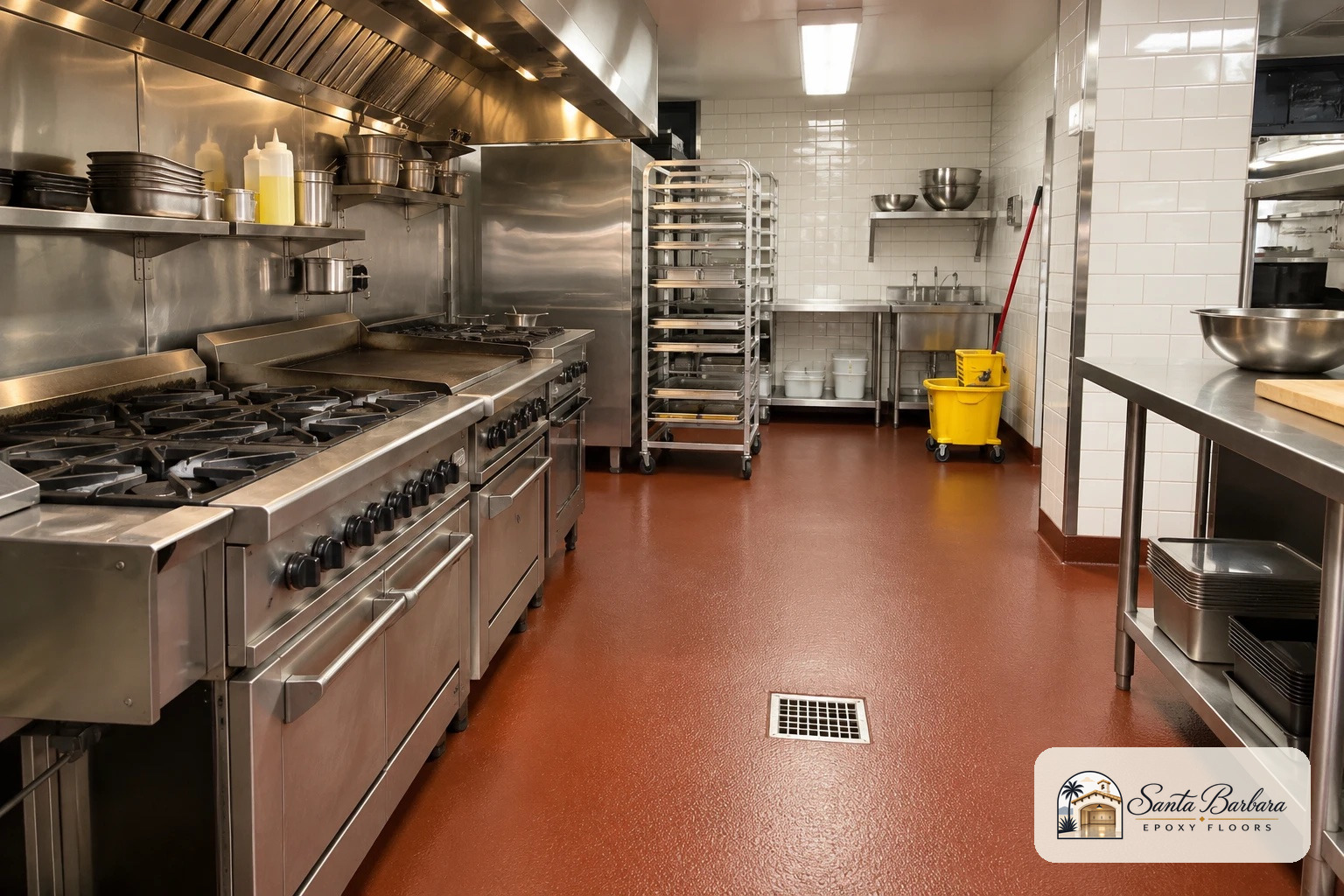 Restaurant & Commercial Kitchen FloorsSeamless urethane cement with integral cove base, sloped to drains and built for washdowns.Learn more →
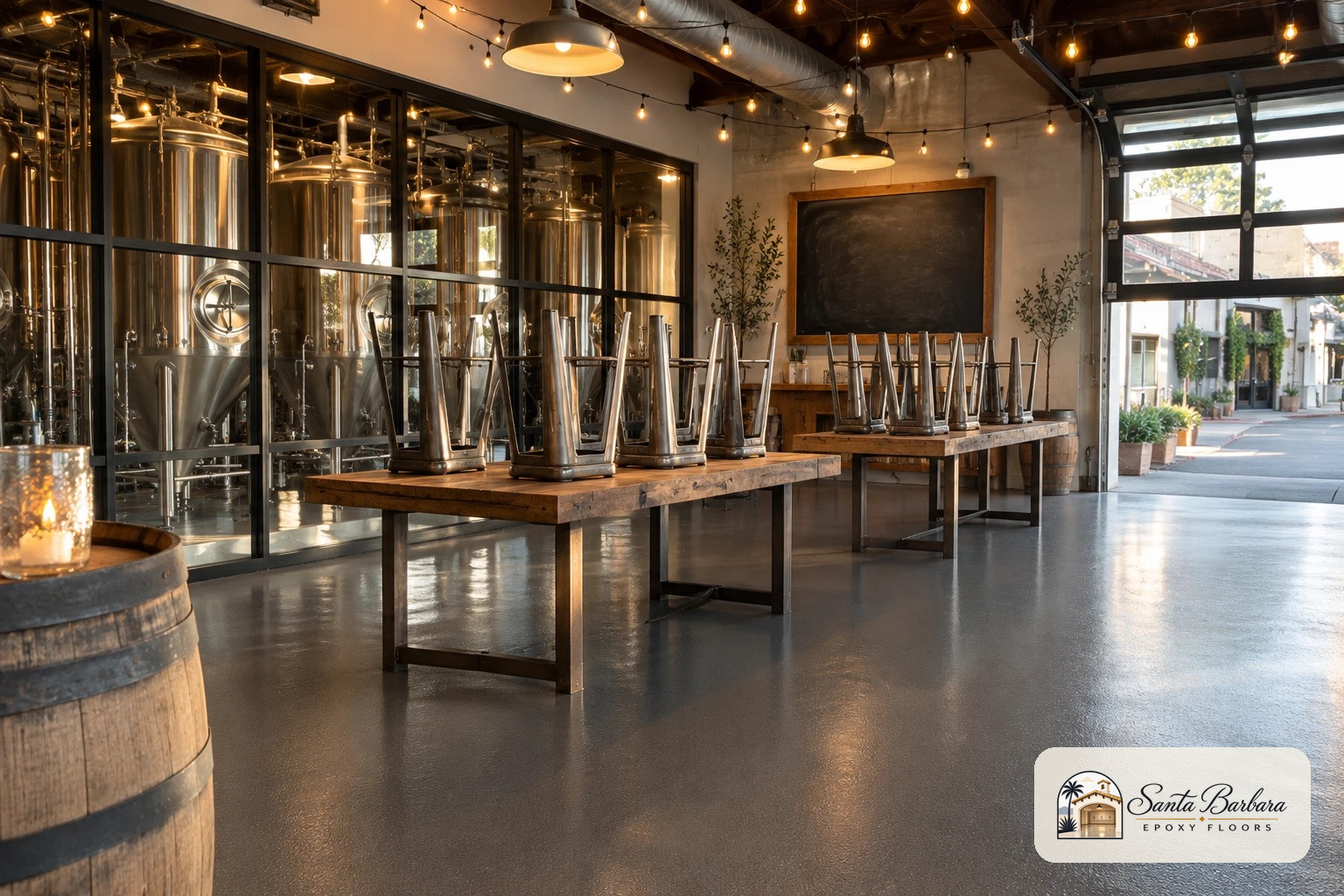
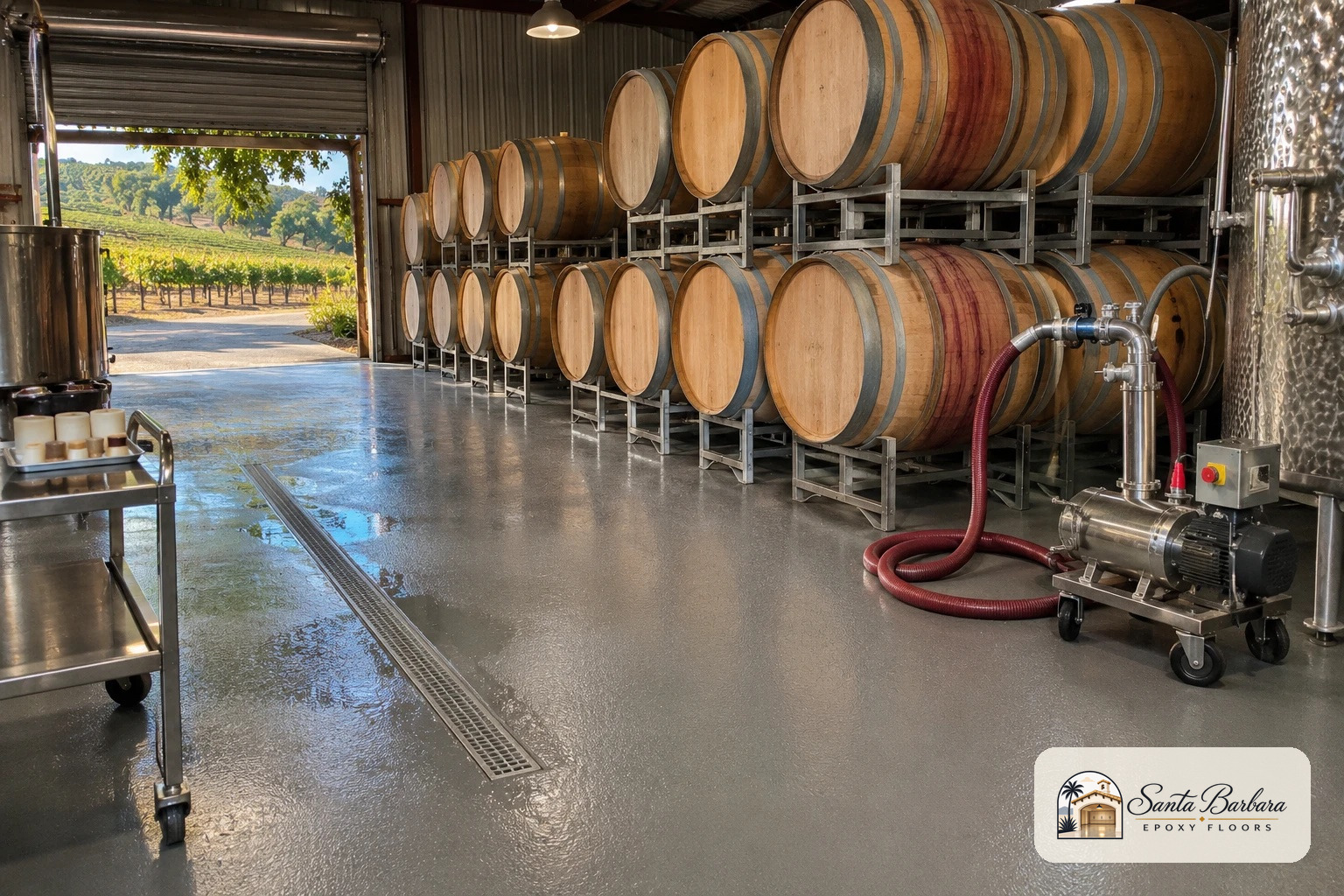 Brewery & Winery FloorsAcid- and heat-resistant floors for cellars, crush pads, brewhouses and taprooms.Learn more →
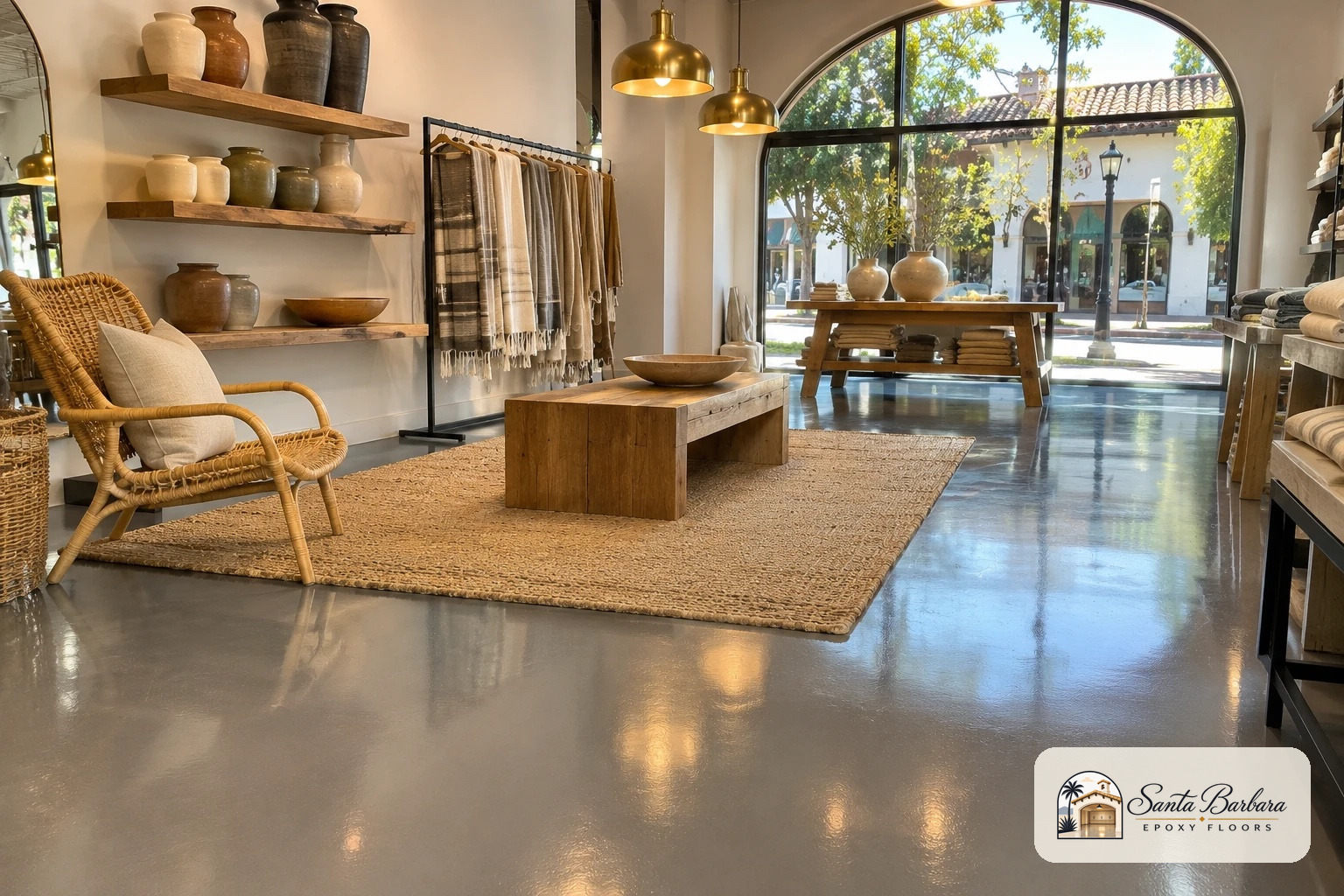 Showroom & Retail FloorsFloors that look good under display lighting and stand up to sandy foot traffic.Learn more →
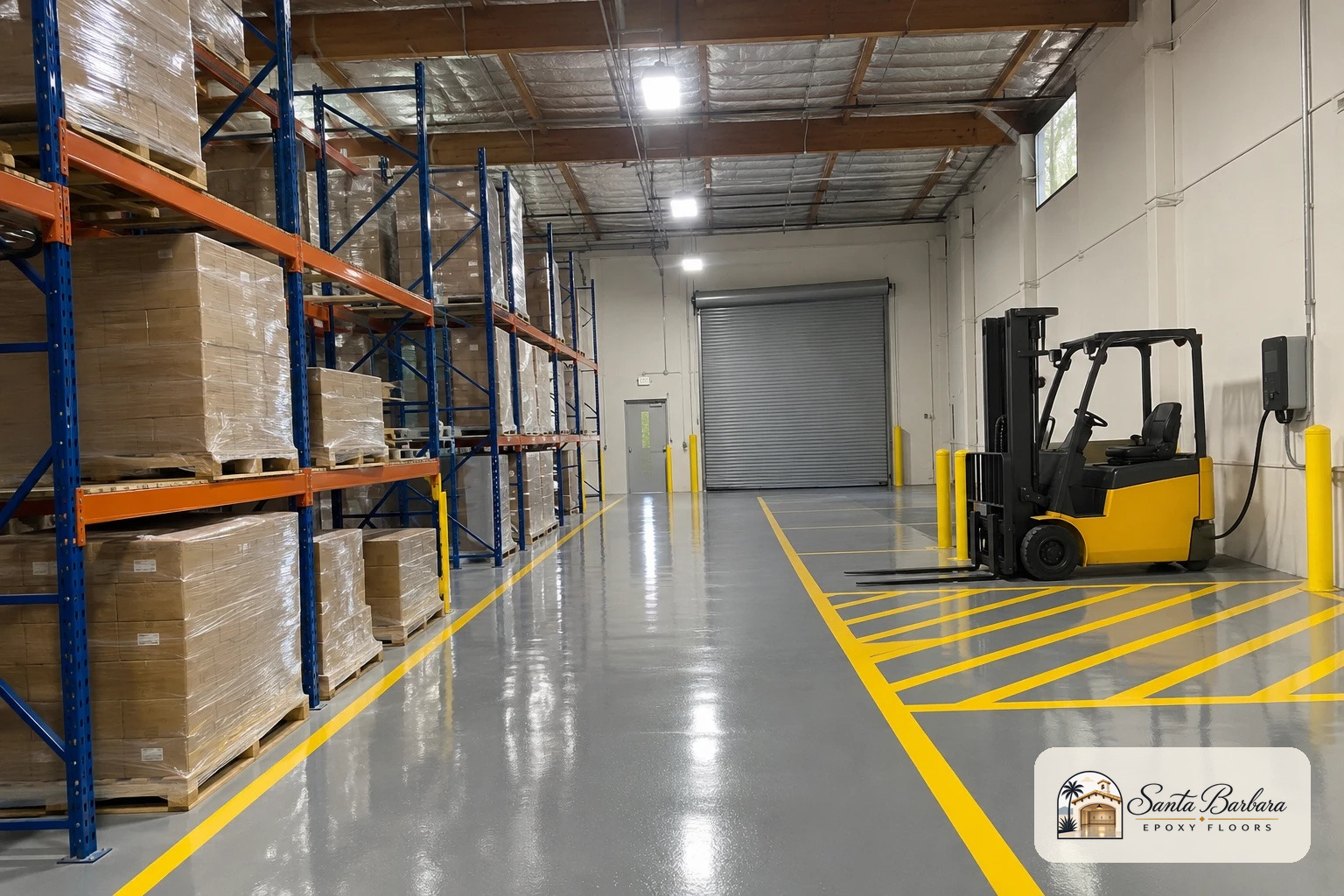 Warehouse & Industrial FloorsHigh-build systems, safety striping and chemical zones for forklifts and heavy loads.Learn more →
A quick guide to which system fits which floor. We confirm the choice after testing your slab.
| System | Best for | Sun & UV | Texture | Watch out for |
|---|---|---|---|---|
| Polyaspartic flake | Garages, workshops, laundry rooms | Holds color | Light grip from chips | Needs proper grinding; fast cure leaves little working time |
| Metallic epoxy | Living spaces, show garages, studios, boutiques | Needs a UV-stable topcoat in sunlit rooms | Smooth unless grit is added | Shows fine scratches from sand |
| Solid-color epoxy | Interior shops, storage, back-of-house | Ambers in direct sun | Smooth or gritted | Keep out of sunlit and outdoor areas |
| Urethane cement | Kitchens, breweries, wineries, cold storage | Matte, fewer colors | Textured, slip-resistant | More cost; built thick for heat and washdowns |
| Textured polyaspartic | Patios, walkways, pool decks | Holds color outdoors | Broadcast aggregate for bare feet | Slope and drainage must be right first |
The right system pairs a moisture-tolerant epoxy base with a UV-stable topcoat, a texture suited to how wet or greasy the floor gets, and a film thickness matched to the loads it carries. We specify each layer based on the slab, the space, and the daily use.
Epoxy and polyaspartic do different jobs. Epoxy penetrates and bonds well to ground concrete, which makes it a strong primer and build coat. We often use a moisture-blocking epoxy primer under the visible layers.
Standard epoxy yellows and chalks when exposed to sunlight. Polyaspartic is aliphatic, so it holds its color under UV. It also cures faster, which means a quicker return to service than a full epoxy system.
| Property | Epoxy | Polyaspartic |
|---|---|---|
| Best role | Primer, build coat | Topcoat |
| UV stability | Low | High |
| Cure speed | Slower | Faster |
For Santa Barbara garages with open doors facing the sun, we recommend an epoxy base with a polyaspartic top.
A smooth, high-gloss floor is easy to clean but slick when wet. Texture adds grip, and it also adds places for dirt to settle.
We adjust traction with these options:
Beach sand tracked into coastal homes acts as an abrasive. A topcoat with good abrasion resistance helps the finish keep its texture longer.
Commercial kitchens need both grip and sanitation. A cove base that runs the coating several inches up the wall removes the seam where grease and water collect.
Thickness is measured in mils, and it should follow the load. Before choosing a build, we inspect the slab for cracks and moisture, because a damaged substrate limits any coating.
| Space | Typical System |
|---|---|
| Residential garage | Flake system, roughly 15–25 mils |
| Retail and showroom | Metallic or solid color, 20–40 mils |
| Breweries and wineries | Urethane cement, often 1/4 inch |
| Warehouses with forklifts | High-build epoxy or mortar |
Urethane cement handles hot washdowns and thermal shock better than standard epoxy. Thin roll-on coatings suit light foot traffic only and wear quickly under tires or pallet jacks.
Concrete near the coast deals with chloride exposure, strong UV, seasonal slab moisture, and abrasive sand at the same time. We select primers, base coats, and topcoats based on how each of these conditions affects a specific floor.
Salt air carries chlorides that settle on garage, patio, and storefront slabs. Bare concrete is porous, so these chlorides can move into the slab over time. Once they reach steel reinforcement, they can contribute to corrosion and spalling.
A fully bonded resin coating creates a non-porous surface that keeps salt residue on top, where it can be rinsed off. We prepare and seal concrete with coating systems built for coastal moisture so salt does not reach the slab.
Common salt sources we plan for include:
Standard epoxy is an aromatic resin. With direct sunlight, it can amber or chalk. This matters for garages with open doors, sunlit showrooms, and outdoor patios.
For these areas, we finish with aliphatic topcoats such as polyaspartic or urethane. Unlike standard epoxy, these resins keep their color under UV exposure. We design systems that stand up to sun, salt air, and daily wear instead of relying on epoxy alone.
| Topcoat Type | UV Stability | Typical Use |
|---|---|---|
| Standard epoxy | Low, prone to ambering | Interior areas with little sunlight |
| Polyaspartic | High | Garages, patios, pool decks |
| Aliphatic urethane | High | Showrooms, metallic and flake topcoats |
Moisture vapor rising through concrete is a leading cause of coating failure, including blisters and peeling. Slab moisture can run higher in the wet winter months and drop during summer heat, so a single reading may not show the full picture.
We test slabs before coating, using methods such as:
When readings exceed a coating's limits, we apply a moisture-mitigating epoxy primer before the base coat. Slabs on grade without a vapor barrier, which are common in older homes, often need this step.
Beach sand is mostly quartz, which rates about 7 on the Mohs hardness scale. Under foot traffic and tires, it scratches and dulls glossy finishes, especially at entryways.
We address this by building thicker coating systems and adding aluminum oxide grit to topcoats in high-traffic areas. The grit improves wear resistance and slip resistance when floors are wet.
You can extend the life of your floor with a few simple habits:
We inspect worn traffic lanes and recommend recoating when the topcoat shows wear, before damage reaches the base layers.
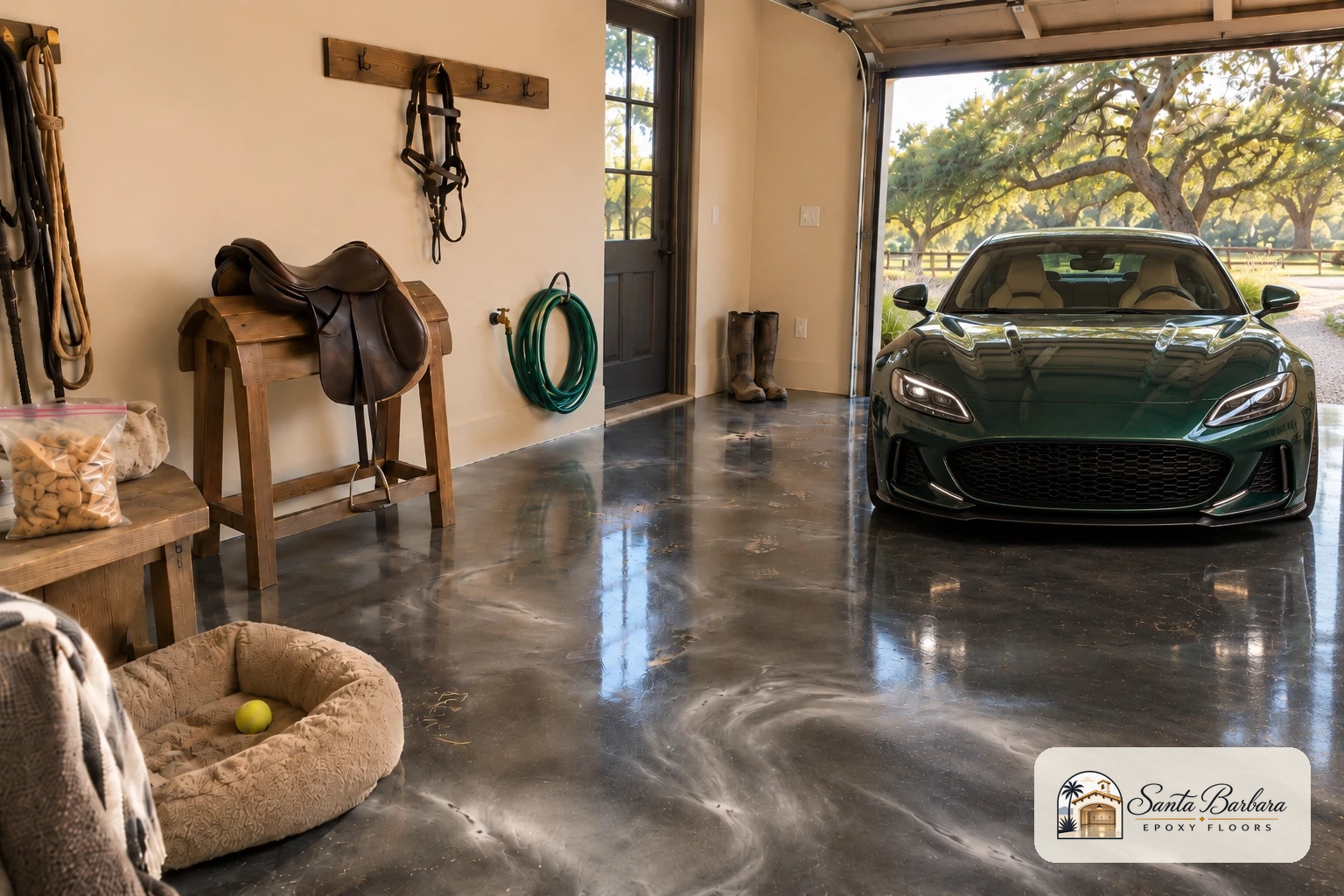
Santa Barbara garages and interiors deal with salt air, tracked-in beach sand, and strong coastal sunlight, so the coating system and finish you choose affect how long the floor lasts. We install fast-curing polyaspartic systems, color-blended flake broadcasts, and poured metallic epoxy, each built on a mechanically ground concrete surface.
Polyaspartic is a type of polyurea that cures faster than standard epoxy and does not yellow under UV exposure. That matters for garages that sit open to afternoon sun near the coast.
Because it cures quickly, a polyaspartic garage is back in use sooner than one coated with a full epoxy system. We confirm walk-on and drive-on times for your specific products before we start. Our standard system includes:
Beach sand works like sandpaper on soft finishes. A cured polyaspartic topcoat holds up to that abrasion better than paint or single-coat DIY kits.
Flake floors use vinyl chips broadcast into a wet base coat, then sealed with a clear topcoat. The chips hide minor slab imperfections and add light texture for slip resistance.
You can choose a full broadcast, which covers the base completely, or a partial broadcast for a lighter speckled look.
| Flake Size | Appearance | Common Use |
|---|---|---|
| 1/4 inch | Bold, visible chips | Large garages, workshops |
| 1/8 inch | Balanced, granite-like | Most residential garages |
| 1/16 inch | Fine, uniform texture | Laundry rooms, basements |
We mix custom color blends to match cabinets, house trim, or exterior stone. Darker blends hide tracked-in sand and dirt between cleanings.
Metallic epoxy uses mica-based pigments suspended in a self-leveling resin. As the installer moves the material, the pigments settle in different directions and create a marbled, three-dimensional appearance.
No two metallic floors look exactly the same. Results depend on pigment colors, resin thickness, and the technique used during placement.
Common applications include:
Because epoxy can amber under direct sunlight, we finish metallic floors with a UV-stable topcoat when the space receives natural light. This protects the color and gloss in rooms with large windows or open garage doors.
Food and beverage floors in Santa Barbara need to handle hot-water washdowns, grease, fruit acids, and caustic cleaners while staying seamless enough to pass health inspections. The right result comes from three things working together: the resin chemistry, integral cove bases, and careful detailing at drains.
Commercial kitchens are some of the hardest floors to keep clean. Quarry tile is still common, but grout lines and seams give bacteria places to grow, and grout erodes under daily scrubbing.
We install seamless resin systems with broadcast aggregate in cook lines, dish areas, walk-in coolers, and prep rooms. Texture is matched to the zone:
Restaurants rarely close for long, so we often phase work across nights or short closures. Fast-cure materials let kitchens return to service sooner.
Santa Barbara County is one of California's best-known wine regions, from the cellars of the Santa Ynez Valley to the urban tasting rooms in the Funk Zone. Breweries and wineries share the same floor stresses: standing liquid, forklift and pallet jack traffic, and frequent sanitation.
| Facility | Main Floor Stresses |
|---|---|
| Winery crush pad and cellar | Tartaric and citric acids, grape skins, tank cleaning, barrel racks |
| Brewery brewhouse | Hot wort spills, caustic CIP cleaners, sugar residue |
| Packaging and cold storage | Pallet traffic, condensation, cold temperatures |
Sugars and acids left on bare concrete etch the surface and become hard to clean. A sanitary, non-slip floor is built to resist that wear and to slope cleanly toward trench drains.
The joint where a floor meets a wall is where dirt and moisture collect. We form integral cove bases, usually 4 to 6 inches high, so the floor curves up the wall in one continuous surface with no 90-degree corner.
Drains need the same attention. Our process includes:
These details support HACCP-focused sanitation programs, and food processors under federal oversight often look for systems that meet USDA food and beverage processing standards.
Standard epoxy works well in many kitchens, but it can crack or debond when it is hit with hot water or cold product repeatedly. Choosing the right chemistry is our first step on any food project.
| System | Best For | Limitations |
|---|---|---|
| Urethane cement | Hot washdowns, steam, fryer areas, freezers | Matte finish, fewer color options |
| Novolac epoxy | Strong acids, chemical storage | More rigid, less tolerant of heat cycling |
| Standard epoxy | Dry storage, front-of-house, light prep | Lower heat resistance |
Urethane cement applied at 1/4 to 3/8 inch handles temperature swings well and also tolerates damp concrete.
In our coastal work, we also test slab moisture first, because a damp slab near the ocean can cause bonding problems later.
Commercial floors in Santa Barbara need to handle foot traffic, rolling loads, spills, and sand tracked in from the coast. We match each coating system to how the space is used, from polished retail floors to thick industrial builds for forklift lanes and chemical storage areas.
In a showroom, the floor is part of the display. Customers notice scuffs, stains, and dull spots, especially near entrances where beach sand acts like sandpaper underfoot.
We install systems that combine appearance with wear resistance:
Slip resistance matters in retail. Safety and performance come first in high-foot-traffic commercial spaces, so we add anti-slip aggregate to the topcoat at entrances and other areas that may get wet.
Warehouses, distribution centers, and manufacturing spaces need coatings built for load and abrasion rather than looks alone. Bare concrete dusts, absorbs oil, and breaks down under steel wheels over time.
Our industrial installations typically include:
Commercial and industrial epoxy coatings also give facilities a seamless surface that is easier to sweep, scrub, and inspect.
Not every part of a facility wears at the same rate. We assess each zone separately and adjust the system to match.
| Zone | Main Stress | Our Typical Approach |
|---|---|---|
| Forklift lanes and turning areas | Abrasion, point loads, tire scuffing | Thicker build with abrasion-resistant topcoat |
| Battery charging stations | Acid spills | Chemical-resistant novolac epoxy |
| Loading docks | Sand, moisture, temperature swings | Urethane cement or polyaspartic with slip texture |
| Maintenance bays | Oil, hydraulic fluid, solvents | Non-porous epoxy with chemical-resistant topcoat |
Turning zones wear fastest because tires twist against the surface. We recommend scheduled recoating of high-wear areas before the base coat is exposed.
Our repair and recoating services address chips, cracks, and worn traffic paths without replacing the entire floor.
Exterior concrete in Santa Barbara deals with direct sun, salt air, wet bare feet, and sand carried in from the beach. We use UV-stable polyaspartic topcoats, textured traction additives, and careful slope and moisture checks to build outdoor floors suited to these conditions.
Standard epoxy yellows and chalks when it sits in direct sunlight. For that reason, we do not use plain epoxy as the final layer on any exterior surface.
Our patio systems use polyaspartic or aliphatic polyurethane topcoats, which keep their color under UV exposure and resist the fading common near the ocean.
| Coating Type | UV Stability | Typical Outdoor Use |
|---|---|---|
| Standard epoxy | Low (ambers over time) | Base coat only |
| Polyaspartic | High | Patios, walkways, pool decks |
| Aliphatic polyurethane | High | Topcoat over decorative systems |
A pool deck has to be slip-resistant when wet while still being comfortable for bare feet. We adjust the texture to match how each area of the deck is used.
Common options include:
Many older decks have cracks, worn texture, or faded color. In most cases, resurfacing can restore slip resistance without demolition, which reduces cost and downtime compared to replacing the slab.
Chlorine and salt-water pool chemicals can wear down weak coatings. We choose topcoats rated for chemical exposure around pool edges.
Water that collects on a coated surface can lead to blistering and early wear. Before we coat, we check slope, drain locations, and spots where water pools.
Our exterior preparation process includes:
Decks over living spaces or below-grade areas may need a waterproofing membrane first, and we'll tell you if yours does. Where we find low spots, we correct them before applying any coating rather than covering the problem.
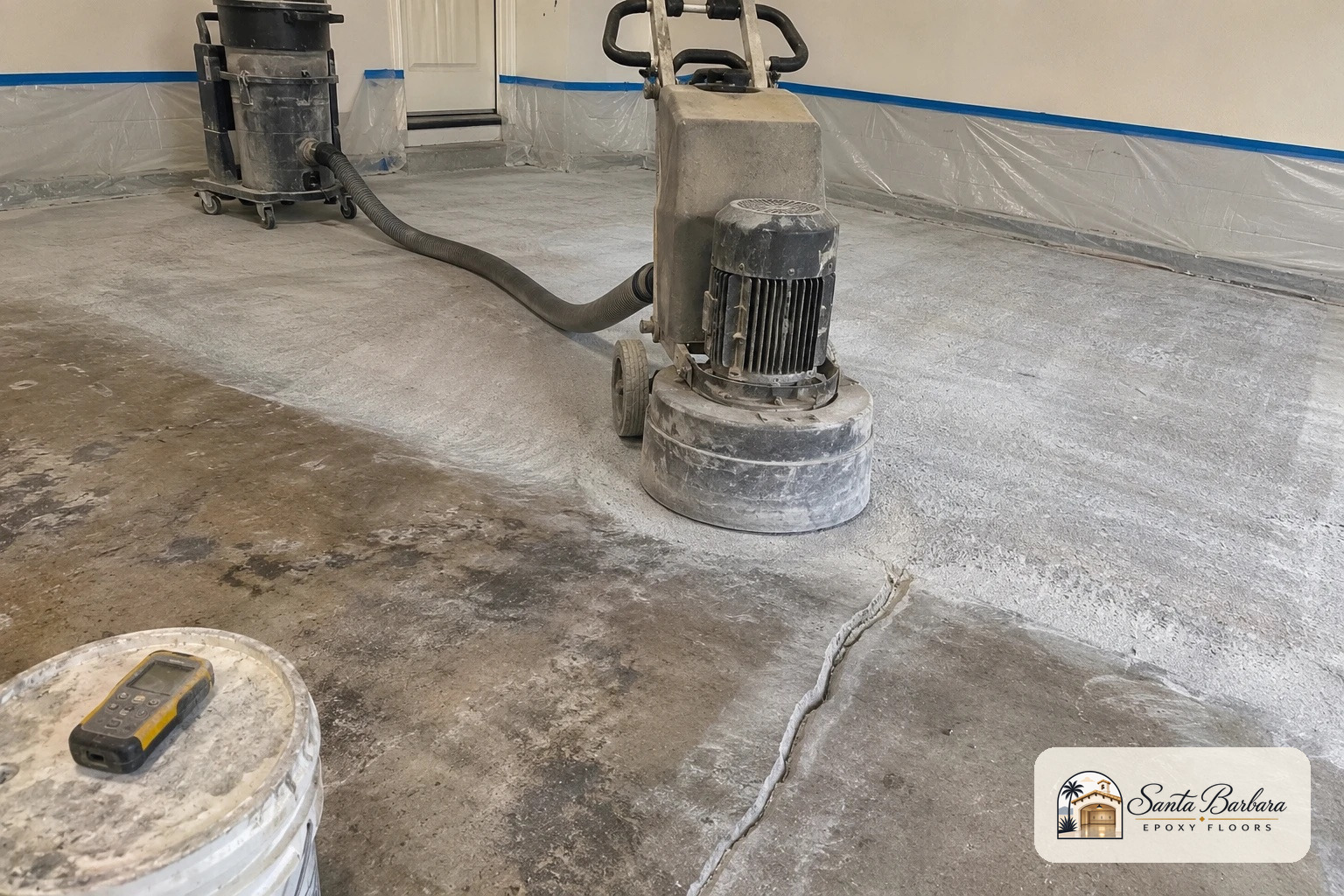
A coating bonds only as well as the concrete beneath it. We grind to a measured surface profile, test slab moisture with in-situ probes, select primers based on published product limits, and repair cracks, spalls, and worn coatings before any new finish goes down.
We use diamond grinding to remove sealers, paint, adhesive residue, and the weak top layer of concrete known as laitance. Our surface preparation is measured against the International Concrete Repair Institute (ICRI) Guideline 310.2R, which defines ten Concrete Surface Profiles (CSP 1 through CSP 10).
Each coating system needs a specific texture:
| Coating Type | Typical Target Profile |
|---|---|
| Thin-film sealers and polyaspartic topcoats | CSP 1–2 |
| Epoxy primers and broadcast flake systems | CSP 2–3 |
| High-build epoxy and slurry systems | CSP 3–5 |
We compare the ground surface to ICRI replica chips. This removes guesswork about whether the floor is ready.
Coastal slabs in Santa Barbara often sit over damp soil, and many older garages lack a vapor retarder under the concrete. We test using ASTM F2170, which measures relative humidity (RH) inside the slab with probes placed in drilled holes.
Key parts of the standard we follow:
We record the RH percentage and slab temperature for each location. Those numbers guide primer selection.
Every coating manufacturer publishes a maximum RH or vapor emission limit. Many standard epoxy primers are rated to about 75–85% RH, while dedicated moisture-mitigating epoxies are commonly rated up to 99–100% RH.
We match the primer to the measured reading, not to an assumption. If a slab reads 92% RH, a standard primer is the wrong choice, and we specify a moisture-tolerant system.
Skipping this step is a frequent cause of blistering and delamination. Moisture vapor pushing up through the slab creates pressure beneath the coating, and alkaline water can break down the bond over time.
We assess each defect before filling it. The material depends on whether the crack or joint still moves.
On outdoor patios and pool decks, we account for wider temperature swings. Honoring moving joints prevents reflective cracks from appearing in the new surface.
Not every worn floor needs a full removal. Beach sand tracked into garages and storefronts acts as an abrasive, and it gradually dulls and thins the topcoat before the base layers wear through.
We start by checking the existing coating's bond. Where adhesion is uncertain, we use pull-off testing based on ASTM D7234 and look for hollow-sounding or lifting areas.
Recoating before the wear reaches the base coat usually costs less than a full replacement.
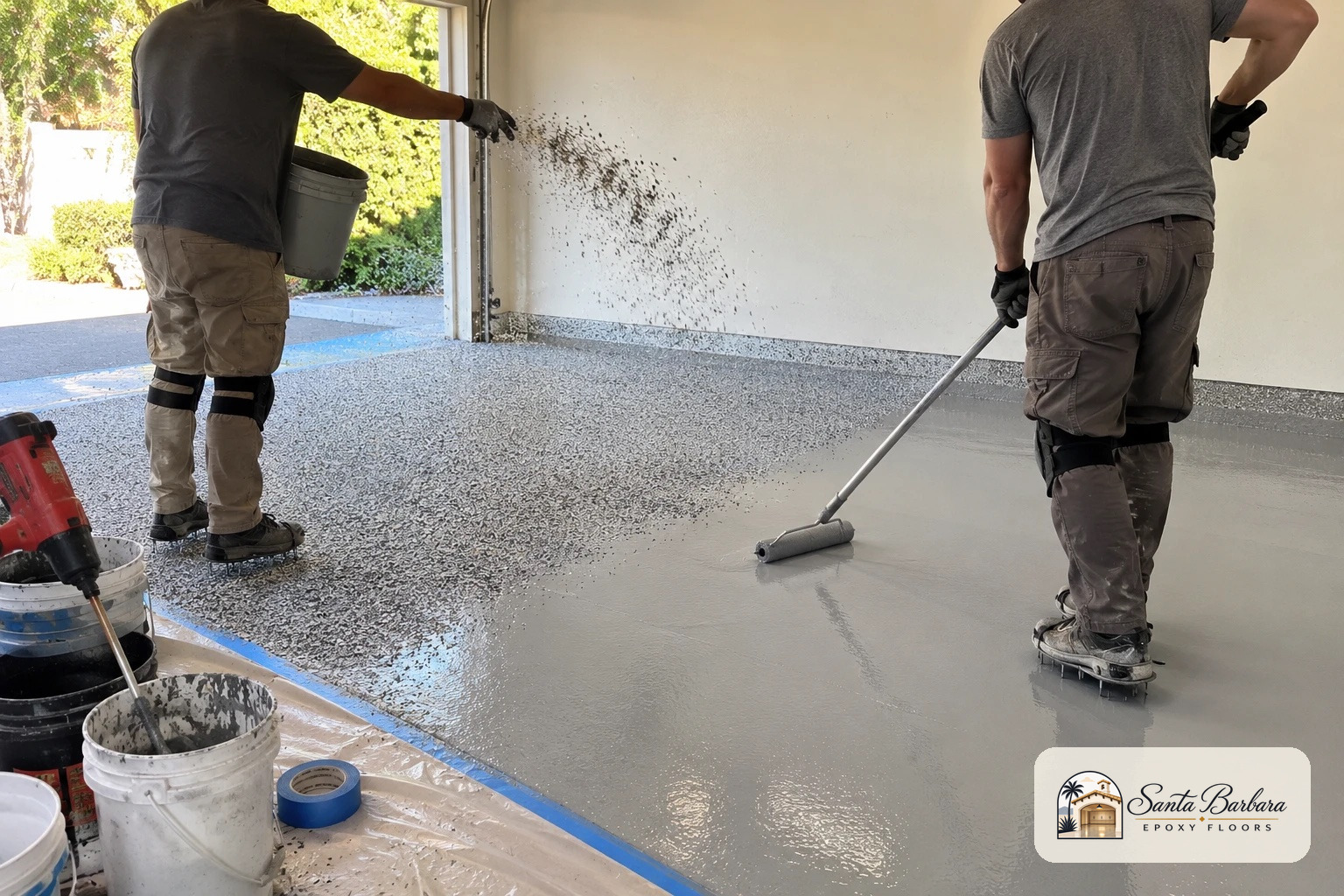
A durable coating starts with a moisture test, an accurate measurement of your slab, and a schedule that fits your cure window. Your cost, downtime, and long-term upkeep all depend on those three things.
Every project begins with an in-person visit. A Funk Zone tasting room, a Mesa garage two blocks from the bluffs, and a Goleta warehouse each need different preparation.
During the assessment, we check:
Slabs near the coast often hold more moisture and collect more sand. That affects both surface prep and which coating system we recommend.
The coating you choose sets how quickly you can use the floor again. Polyaspartic systems return to service fastest, standard epoxy needs a longer cure before vehicles and chemicals, and urethane cement sits in between. Your written estimate lists the walk-on, drive-on, and full-cure times for the exact products on your floor.
Cool, damp marine-layer mornings can slow curing. We plan application windows around temperature and dew point.
For restaurants, retail, and showrooms, we can schedule work overnight or across closed days. That keeps your business downtime as short as possible.
How long a floor lasts depends on traffic, chemicals, sun exposure, and care. A garage coating used by two cars wears differently than a forklift aisle.
Routine care includes:
A well-prepared residential floor with a UV-stable topcoat holds up for many years with basic care. High-traffic commercial floors need a fresh topcoat more often.
Recoating before the base layer wears through costs less than a full replacement. We can set up a scheduled inspection plan for commercial clients.
To get an accurate quote, share these details when you contact us:
After the site visit, you receive a written estimate. It lists the prep method, coating system, mil thickness, repair scope, and expected return-to-service time.
If you are comparing bids, check that each one includes moisture testing and mechanical grinding.
Price is usually calculated per square foot, and the slab matters as much as the size. We price every floor after we measure it and test it, because several site conditions can move the number up or down.
| Factor | Effect on Cost |
|---|---|
| Total square footage | Larger areas often lower the per-foot rate |
| Coating removal | Old epoxy or paint adds grinding time |
| Crack and spall repair | Billed by linear foot or by area |
| Moisture mitigation primer | Required when vapor readings are high |
| System type | Flake, metallic, and urethane cement cost more than single-color coats |
| Coving and drains | Common in kitchens, breweries, and wineries |
A two-car garage is roughly 400 to 500 square feet. A restaurant kitchen or production floor may need integral cove base, slip-resistant aggregate, and urethane cement for thermal shock. Each of those items is listed on your estimate.
From our base at 480 Santa Barbara St we coat floors across Santa Barbara: Downtown and the Funk Zone, the Mesa, the Riviera, Samarkand, San Roque, the Eastside and the Westside. We also work in these nearby communities.
We price every garage after we inspect and measure it, because the condition of the slab moves the number more than its size. The main cost factors are square footage, slab condition, surface preparation, coating system, decorative options, and topcoat selection.
Common items that raise the price:
You get a written estimate after the site visit, with each of these items listed.
Decorative flake floors handle beach sand and foot traffic better. The multicolored chips hide grit, scuffs, and small scratches, and the texture adds some grip.
Metallic epoxy floors create a smooth, reflective finish with a marbled look. That finish is attractive in showrooms, but sand acts as an abrasive on it. Fine scratches show more clearly on a glossy, solid surface.
| Feature | Decorative Flake | Metallic Epoxy |
|---|---|---|
| Hides scratches and sand | High | Low to moderate |
| Slip resistance | Moderate, adjustable | Lower without additives |
| Appearance | Speckled, terrazzo-like | Smooth, 3D, high-gloss |
| Maintenance in sandy areas | Lower | Higher |
For metallic floors near the beach, we recommend a urethane or polyaspartic topcoat, walk-off mats at entrances, and frequent dust mopping. A satin topcoat also makes wear less visible than a high-gloss finish.
Urethane cement (urethane mortar) is usually the best fit for these spaces. It tolerates hot water washdowns, steam cleaning, and thermal shock that can cause standard epoxy to crack or delaminate.
Breweries and wineries also produce acids. Fruit acids, lactic acid, and cleaning chemicals can etch weaker coatings over time, and urethane cement resists these better than most epoxies.
Key features we include in commercial food and beverage floors:
You should confirm health code and inspection requirements with Santa Barbara County Environmental Health before work begins. We can match texture levels to each zone, such as more grip at the dish pit and less in dry storage.
Standard epoxy is not a good choice for outdoor surfaces. UV exposure makes epoxy yellow and chalk in direct sun.
Polyaspartic coatings are UV-stable and keep their color outdoors. They also cure quickly and stay flexible enough for normal temperature swings.
For pool decks, many owners choose alternatives that "breathe" and stay cool, such as:
Coastal moisture also matters. Slabs on grade can push vapor upward, so we test the concrete before we choose a system. Salt residue should be rinsed off regularly, because it can degrade sealers and the concrete surface over time.
Coatings bond mechanically, and they need an open, clean surface to grip. Diamond grinding removes laitance, old sealers, and contaminants, and it creates a surface profile, typically CSP 2 to CSP 3 for most coatings.
Acid etching does not reliably remove oils or sealers. That is why we use grinding with dust collection on industrial floors.
Moisture testing comes next. Common methods include:
Moisture mitigation is usually needed when readings exceed the coating manufacturer's limits. Many standard epoxies list about 3 to 5 lbs or 75% to 80% RH as the limit. Mitigation primers can often handle readings up to 95% to 100% RH or more, depending on the product.
Skipping these steps can lead to blistering, peeling, and a white haze under the coating. On a 1,000-square-foot floor, fixing a failed coating usually costs more than testing and preparing correctly at the start.
Epoxy has real limits near the ocean. The main drawbacks are:
After about 10 years, the floor's condition tells you which option makes sense.
| Condition | Recommended Action |
|---|---|
| Dull finish, light scratches, good adhesion | Screen and recoat the topcoat |
| Small chips, isolated cracks, hot-tire marks | Spot repair and recoat |
| Widespread peeling, blistering, or delamination | Grind off and replace |
| Moisture-related failure | Replace with moisture mitigation primer |
A simple check is to tap suspect areas with a coin or screwdriver handle. A hollow sound usually means the coating has lost its bond. We inspect older floors on site and test adhesion before recommending a recoat, since a new topcoat will not fix a failing base layer.
Call or send a few details. We'll visit, test the slab and recommend the right system in writing.
 Call 805-456-2887